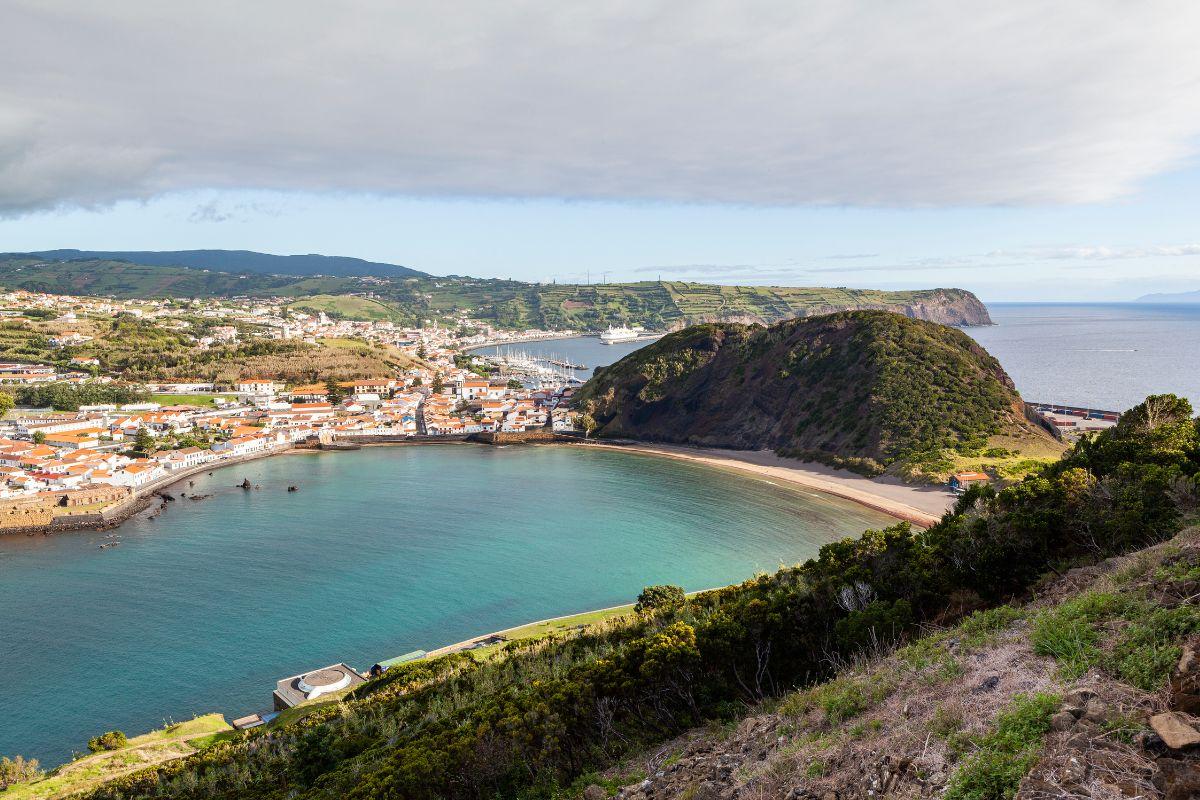
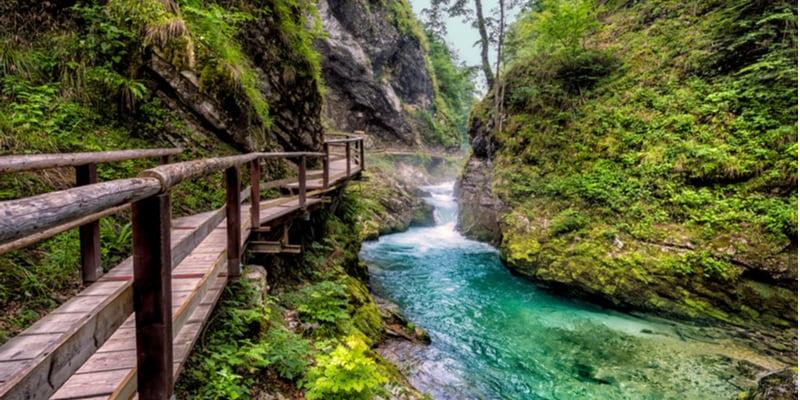
Azores, what to see? Enchanting waterfalls, surreal crater lakes, dense vegetation, beaches and lush nature.
You don't need to go to the Caribbean, paradise really exists and is located off the coast of Portugal: these are the Azores, an archipelago of nine islands of volcanic origin that is still semi-unknown.
Azores, what to see?
Angra do Heroísmo, Terceira
Monte Pico, Pico
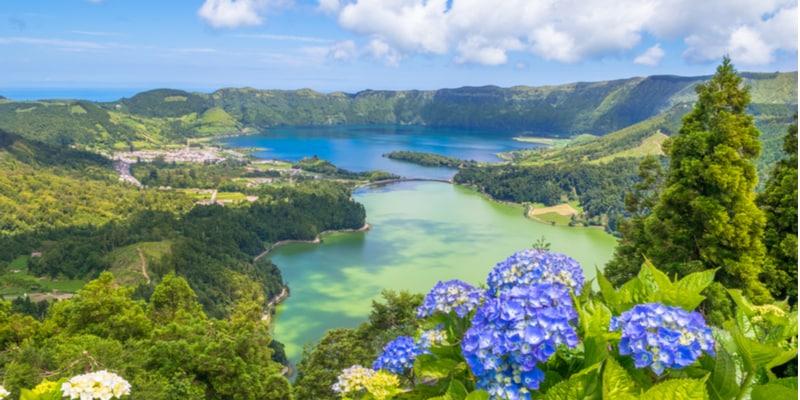
Sete Lagoas, Flores
Furnas, Sao Miguel
Farol de Gonçalo, Santa Maria
Furna do Enxofre, Graciosa
Termas da Ferraria, Sao Miguel
Miradouro Vista do Rei, Sao Miguel
Algar do Carvão, Terceira
Caldeira Velha, Sao Miguel
Biscoitos swimming pools, Terceira
Gruta do Natal, Terceira
Gorreana Tea, Sao Miguel
Fajã da Caldeira do Santo Cristo, Sao Jeorge
Barreira da Faneca, Santa Maria
Serra do Cume, Terceira
Rocha dos Bordões, Flores
Furna do Enxofre, Graciosa
Laguna do Caldeirão, Corvo
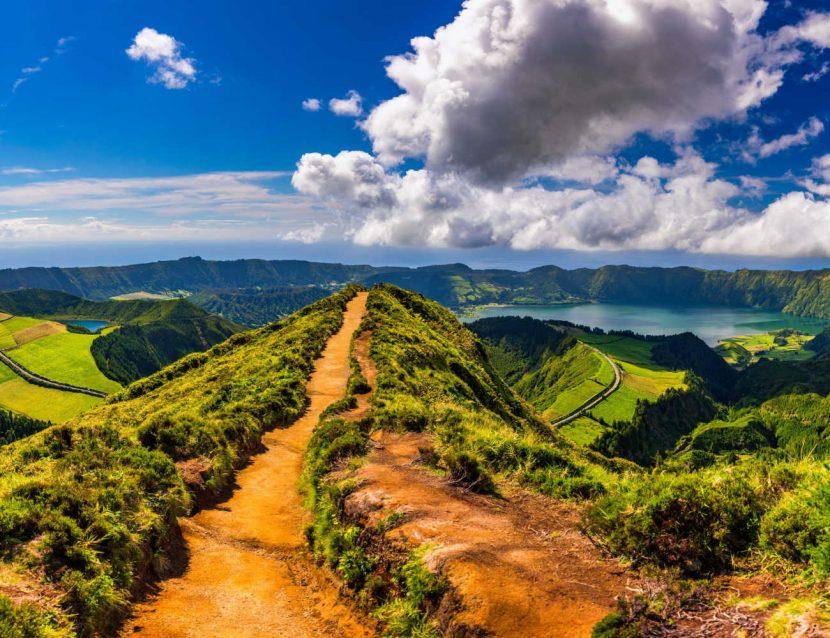
If you love sport, adventure and lush nature, it is hard to imagine a better place than these islands in the middle of the ocean. There is another reason to visit this autonomous region of Portugal: in recent years there are more flights and more offers to reach these paradise islands in Portugal.
If you are planning a trip to the Azores Islands, we have put together a useful guide to the most beautiful beaches and things to see in the archipelago with a map.
 "/>
"/>
Azores
The archipelago of the Azores Islands lies off the north Atlantic Ocean about 1,500 km from Lisbon and about 3,900 km from the east coast of North America.
The islet of Monchique on theisland of Flores, is considered the westernmost point of Europe, although from a geological point of view the two westernmost islands of the Azores (Flores and Corvo) actually lie on the North American plate.
All the islands have volcanic origins and Mount Pico on the island of Pico, at 2,351 metres, is the highest mountain in the whole of Portugal.
The archipelago constitutes the Autonomous Region of the Azores, one of Portugal's two autonomous regions, together with the archipelago of Madeira. But what are the islands of the archipelago?
São Miguel
The island of Sao Miguel is the largest of the Azores archipelago with a length of 62.1 km and a maximum width of 15.8 km. Together with the island of Santa Maria, located 81 km away, it forms the Eastern Group of the Azores Archipelago. Its highest point (1105 m) corresponds to the Pico da Vara. Due to its abundance of greenery, forests, lakes and thermal waters, the island is also known as Ilha Verde.
Terceira
Terceira is the third largest island of the group in terms of size. The capital, Angra do Heroísmo, is a UNESCO World Heritage Site. The island's capital is also a good place to sign up for a whale-watching trip. In the centre of the island, the Algar do Carvão attracts brave adventurers who visit a volcanic cave every day. It is one of the most beautiful islands to reach if you like trekking.
Santa Maria
It is the third smallest island in the Azores and is known as Yellow Island. It is the southernmost and easternmost of the Azores, a small paradise with spectacular beaches and bays. The green colour of the fields, the whitewashed houses, the black of the basalt and the gold of the sandy beaches make the island a living palette of colours and a wonder you absolutely must visit. The island is crossed by the red desert known as Barreira da Faneca.
Pico
As we have already mentioned, the island of Pico is known for Portugal's highest mountain, the Pico Volcano. The landscape of the island of Pico is a mixture of lava rocks and exotic vegetation, and here you will find some of the best swimming spots in the world. Pico is also the ideal island for trekking, hiking, jogging, walking, birdwatching, whale and dolphin watching.
Sao Jeorge
The island of Sao Jeorge is undoubtedly the most unspoilt and solitary island in the archipelago. If you love hiking, it is the perfect island for you. The trekking on the Fajã da Caldeira do Santo Cristo is one of the most beautiful trails in the world. But that's not all, here you will also find delicious cheese, famous throughout Portugal and known as Queijo São Jorge.
Graciosa
The island of Graciosa is also known as the White Island, due to its geomorphological characteristics and to the place names on the island, particularly those of places like Pedras Brancas, Serra Branca and Barro Branco. The island has been classified by Unesco as a World Biosphere Reserve. It is characterised by vineyards, green expanses and blue waters. In Santa Cruz da Graciosa, its only municipality, cobbled streets and traditional infrastructure stand out amidst the surrounding green paradise.
Corvo
The island of Corvo is the smallest of the Azores archipelago. Vila Nova do Corvo is the only settlement on the island where just under a hundred people live. Seen from afar, the island looks like a caldera in the middle of the sea. Here, people speak a medieval Portuguese dialect and do not lock their houses. If you love trekking and birdwatching, this is the island for you. The most beautiful trek on the island will take you to see the immense 300-metre deep caldera.
Flores
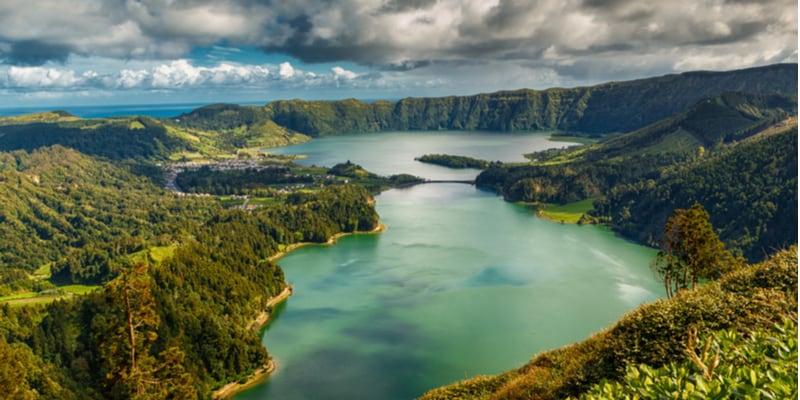
The island of Flores is the westernmost island in the archipelago and is a spectacle at flowering time, when it is covered in magnificent flowers. The island, characterised by spectacular waterfalls, is also home to an area known as Lagoas, characterised by 7 lakes of volcanic origin.
Faial
The Varadourok natural pools on the island of Faial are the absolute best place to swim. Faial is also home to one of the most popular craters in the archipelago, the Caldeira, surrounded by blue hydrangea flowers. In the western part of the island, don't miss Capelinho, a small volcano that seems to belong to another planet. Don't miss a visit to the caves of Costa da Feteira and the viewpoint of Monte da Guia.
Beaches of the Azores
Where to go to the beach in the Azores? Here is a selection of the most beautiful beaches in the Archipelago.
Praia Formosa, Santa Maria
Porto Pim, Faial
Praia do Almoxarife, Faial
Praia de Santa Bárbara, São Miguel
Praia Água de Alto, São Miguel
Praia da Caloura, São Miguel
Prainha de Água d'Alto, São Miguel
Silveira, Terceira
Praia dos Mosteiros, São Miguel
Islet of Vila Franca, São Miguel
Piscinas do Carapacho, Graciosa
Caneiros Natural pools, São Miguel
Praia de São Mateus, Graciosa
Canto da Areia, Pico
Waterfall do Poço do Bacalhau, Flores
Climate
The Azores archipelago is characterised by a warm, oceanic, subtropical climate, with temperatures ranging between 15 °C and 27 °C.
The winter months are slightly wetter than the summer months. January is undoubtedly the coldest month with temperatures averaging between 14 and 15 °C. The hottest months, on the other hand, are June to August with temperatures ranging between 24 °C and 28 °C.
When to go? The best time to plan a holiday in the Azores is from April to October. For more information, visit the official website https://www.visitazores.com.
Photos  "/>
"/>  "/>
"/>  "/>
"/>  "/>
"/>  "/>
"/>  "/> Map
Portugal